
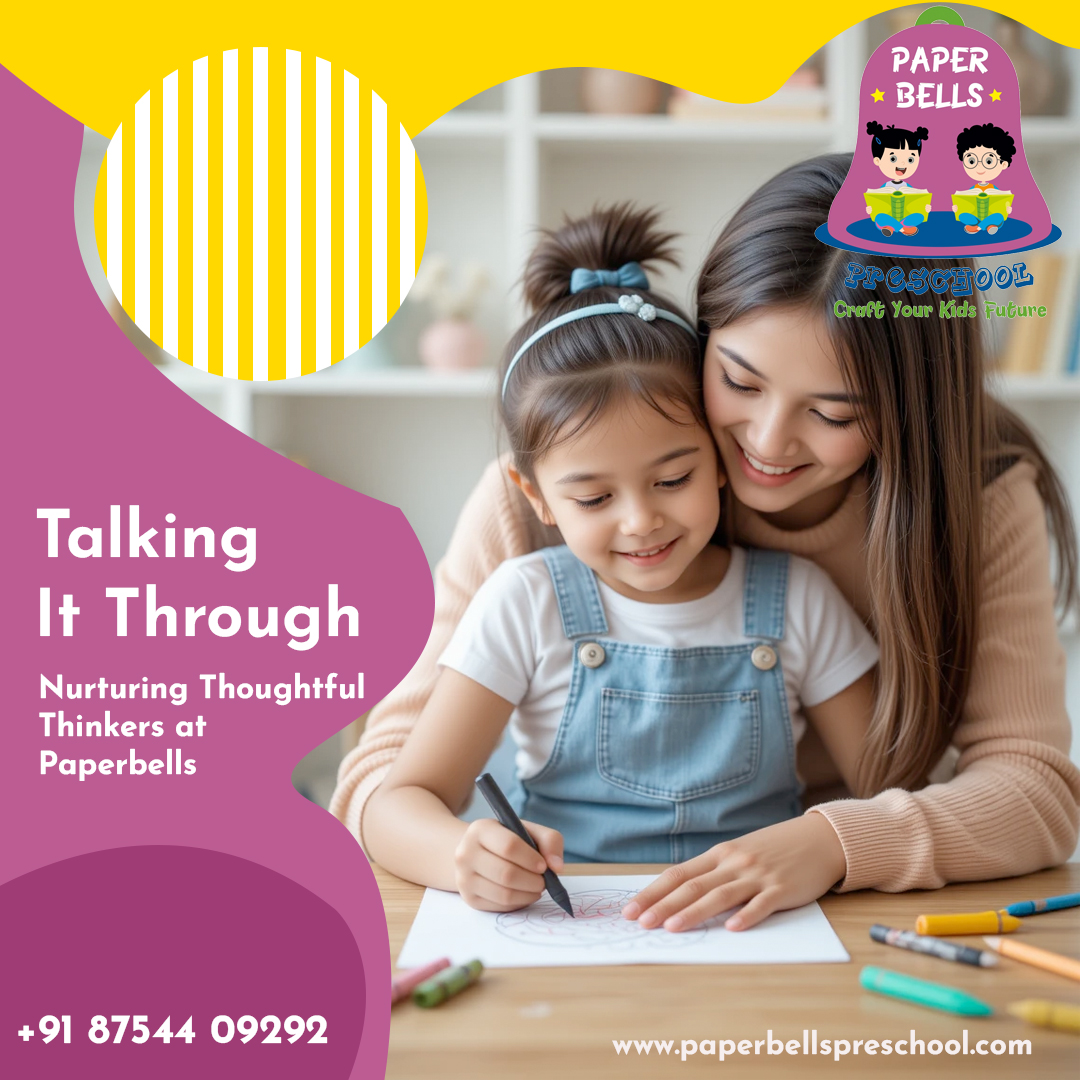
Nurturing Thoughtful Thinkers at Paperbells Preschool, Hebbal
At Paperbells Preschool in Hebbal, we believe that early thinking doesn't begin in silence-it begins in conversation. When young children talk through their ideas, their actions, and even their confusions, they're doing far more than narrating play. They are practicing one of the most powerful learning tools they possess: language.
From problem-solving in block corners to collaborative play in the garden, our classrooms are rich with the sounds of children "thinking out loud." Far from noise, this verbal processing is the sound of learning in action. It's how children begin to structure ideas, make sense of cause and effect, and understand their own reasoning.
The Power of Speaking Before Writing
Before children can write down their thoughts, they must first learn how to form them. At this age, speech is not simply a communication tool-it's a cognitive one. When a child says, "If I put this block here, it might fall," they're not just talking. They're planning, hypothesizing, and predicting.
At Paperbells, we encourage children to talk through their processes and reflect aloud on what they're doing. Whether they're painting, stacking, sorting, or storytelling, the invitation to "tell me what you're thinking" creates an environment where children are respected as capable thinkers, even before they can read or write.
From Curiosity to Clarity: Language as a Thinking Tool
Verbalizing thoughts is the bridge between curiosity and clarity. It allows children to:
- Make connections between actions and outcomes
- Organize their ideas in a structured way
- Strengthen their memory and reasoning skills
- Develop self-awareness and emotional regulation
This is why teachers at our Hebbal centre consistently model and invite open-ended dialogue. Questions like "What do you think will happen next?" or "Why did you choose that way?" aren't assessments-they're tools that extend thinking, invite reflection, and deepen understanding.
Building Self-Regulation, One Thought at a Time
Logical reasoning is only one piece of the puzzle. When children speak their thoughts, they're also learning to pause, reflect, and make intentional choices. This builds the foundation for self-regulation.
For example, a child who says, "I was going to grab it, but I waited my turn," is not just describing an action. They're recognizing a decision, articulating self-control, and reinforcing the behavior. This internal dialogue-spoken aloud-is what turns moments of choice into lifelong habits of thoughtful behavior.
At Paperbells Preschool, Hebbal, these moments are not accidental. They're encouraged, supported, and gently guided by teachers who understand that helping children "talk it through" now lays the foundation for emotional intelligence and independent thinking later.
An Environment That Listens
Children will speak when they know they are heard. Our classrooms are designed to be listening spaces-calm, patient, and responsive. Educators pause, tune in, and respond with respect. We don't rush children through their thoughts; instead, we hold space for them to find their words and their meaning.
This atmosphere does more than support verbal skills. It builds confidence. When children know their ideas matter-even if they're unfinished or uncertain-they learn to trust themselves. Over time, this trust translates into stronger communication, deeper reasoning, and more resilient learners.
Why It Matters Now-and Later
What may seem like simple chatter in a preschool classroom is, in truth, the sound of a mind being shaped. Children who are given the freedom and encouragement to verbalize their thinking become children who can explain, justify, negotiate, and reflect.
At Paperbells Preschool in Hebbal, we see this every day. A question voiced, a solution explained, a mistake reconsidered-these are the beginnings of the reasoning skills that will one day support analytical writing, collaborative teamwork, and decision-making in the real world.
A Preschool That Values Thoughtful Expression
At its heart, our approach at Paperbells Preschool is about respect. Respect for the child's thought process, for their growing voice, and for their unfolding understanding of the world.
We do not rush to correct or over-direct. We engage, we ask, and we listen. Because we know that the habit of "talking it through" is more than a communication skill-it's a way of helping children become reflective, articulate, and confident thinkers.
And that, we believe, is one of the most powerful gifts early education can offer.


