
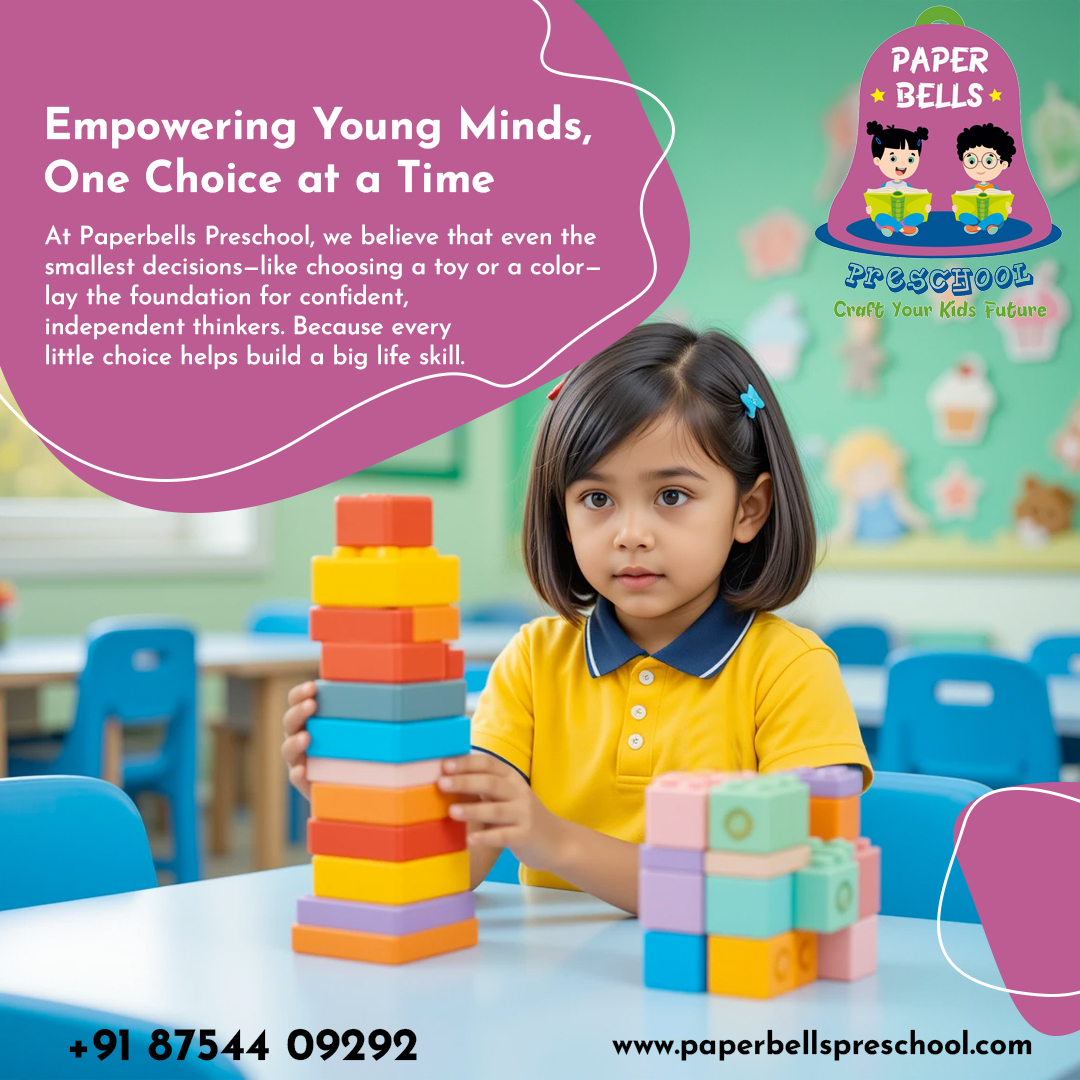
At Paperbells Preschool, Every Small Choice Builds a Big Skill
When we ask a preschooler, "Would you like the red brush or the blue one?" It might seem like a casual question. But within that moment lies something powerful-an invitation to think, to choose, and to express autonomy.
At Paperbells Preschool, we recognize that the early years are not just about what children learn, but how they learn. We believe that giving children opportunities to make small, safe choices plays a vital role in strengthening the developing brain. It cultivates decision-making, promotes independence, and sets the stage for emotional resilience.
In our thoughtfully designed classrooms, we don't just guide learning-we create environments where children lead their own exploration, one mindful decision at a time.
Why Choice-Making Matters in Preschool
The preschool years are marked by incredible brain growth. During this time, neural pathways are forming rapidly, and experiences shape how children think, feel, and behave. When children are allowed to make choices-even small ones-they activate parts of the brain responsible for reasoning, self-regulation, and memory.
Whether it's choosing between two crayons, picking a storybook for circle time, or deciding how to build with blocks, each choice helps wire the brain for independence and confidence. Over time, children become more thoughtful, more aware of consequences, and more invested in their actions.
At Paperbells Preschool, we embrace these daily opportunities not as distractions from structured learning, but as essential building blocks of it.
Fostering Independence in a Safe and Supportive Way
Giving children choices doesn't mean letting go of structure. In fact, it's quite the opposite. Within a well-prepared environment and under the guidance of trained educators, offering choices becomes a strategic tool to help children practice autonomy without feeling overwhelmed.
For example, a teacher might ask, "Would you like to draw first or join the puzzle table?" Both options are developmentally beneficial, but the child gets to take ownership of the experience. This sense of ownership builds engagement-and when children are engaged, their learning becomes deeper and more meaningful.
In this way, our team at Paperbells carefully integrates choice into every part of the day, from meals and materials to play and problem-solving.
Supporting Emotional Growth Through Choice
Making choices also nurtures emotional intelligence. When a child feels their preferences are respected, they feel more confident, valued, and connected. At Paperbells Preschool, we use choice as a way to help children understand themselves and communicate their needs.
By encouraging questions like, "What do I like?" or "How does this make me feel?", we give children tools to manage frustration, celebrate their preferences, and develop the courage to express themselves-essential foundations for emotional well-being.
Even in moments of conflict or challenge, offering limited choices ("Would you like to clean up now or in five minutes?") provides children a sense of control and dignity, helping them manage transitions more smoothly.
Learning Through Exploration, Not Just Instruction
At the heart of our approach is the understanding that children are natural learners. When we empower them to make decisions, they explore, hypothesize, and discover in ways that foster true understanding.
In our activity centers, children are often invited to choose materials that interest them. In the art corner, this may mean picking between watercolors and oil pastels. In the construction zone, it may involve choosing what to build or whom to build with. These aren't just playtime choices-they are early lessons in planning, collaboration, and creativity.
At Paperbells Preschool, learning isn't passive. It's personal, participatory, and powered by choice.
A Classroom That Listens to Children
Creating a child-led classroom doesn't mean chaos or lack of direction. It means listening-to what children need, what they wonder about, and how they want to engage. Our educators are trained to notice those quiet moments when a child hesitates, explores, or experiments-and to gently nudge them with empowering questions.
"Would you like help solving this puzzle, or would you like to try a bit more on your own?"?"Would you like to tell us about your picture during circle time, or would you rather just show it?"
These seemingly small questions build enormous confidence over time. They help children develop a voice-and feel safe using it.
Planting the Seeds of Lifelong Decision-Making
Decision-making is a life skill, and like any skill, it must be nurtured early and often. At Paperbells Preschool, every choice a child makes-big or small-contributes to their ability to think critically, navigate social settings, and trust themselves.
We don't ask children to simply follow instructions-we invite them to participate. Because we know that when children are included in their own learning journey, they grow into adults who are confident, thoughtful, and equipped to make wise choices.
The Little Choices Are the Big Lessons
It's easy to overlook the quiet power of a simple question like, "Red brush or blue?" But at Paperbells Preschool, we know that such questions are at the heart of how children learn-not just academics, but who they are.
By creating space for thoughtful choices within a warm and secure environment, we help preschoolers build stronger brains, more confident voices, and deeper connections with their world.
Because when children are trusted to choose, they learn to believe in themselves-and that's a lesson that lasts a lifetime.


